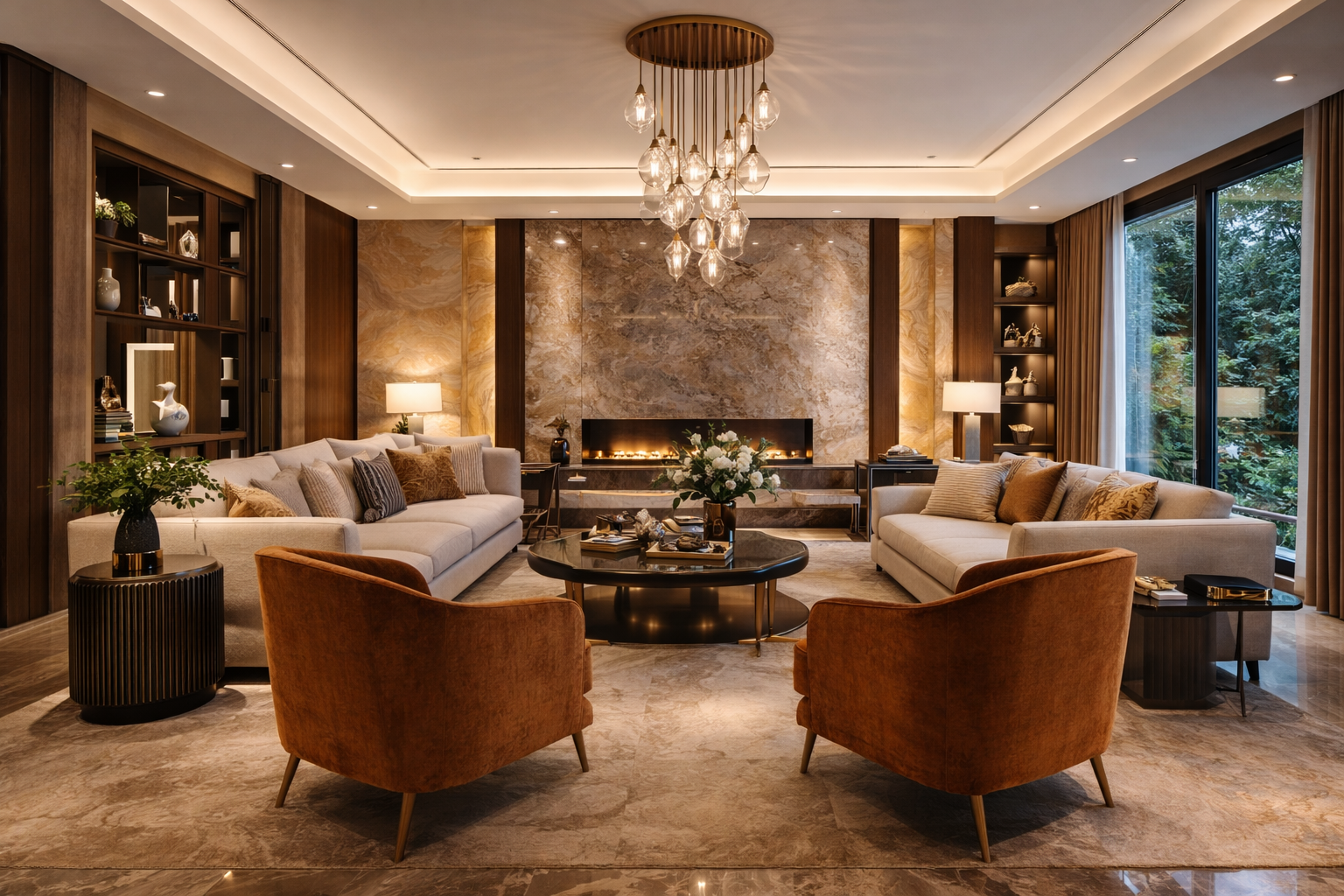
A beautifully designed living room is more than an arrangement of furniture, colours, and decorative elements. It is a carefully planned environment where comfort, functionality, proportion, lighting, and personal style work together. The living room shown in the image reflects this approach through warm materials, refined furniture, layered lighting, natural views, and a balanced colour palette. Such spaces demonstrate how thoughtful interior planning can create an atmosphere that feels luxurious without becoming excessive.
A Luxury Interior Design Company in Noida approaches residential interiors by understanding how a space will be used before selecting finishes or furnishings. From the overall layout to the smallest decorative detail, every element can contribute to creating a cohesive and welcoming home.
Understanding the Foundation of Elegant Interior Design
Timeless interiors begin with a strong design foundation. Before choosing furniture or decorative accessories, designers study the room's dimensions, natural light, circulation, architectural features, and functional requirements. This allows the design to remain visually appealing while supporting everyday activities.
In a sophisticated living room, seating should encourage conversation while maintaining comfortable movement around the space. The furniture arrangement in the featured interior creates a central conversational area, with sofas and accent chairs positioned around a coffee table. This arrangement makes the room feel organised without making it appear rigid.
Proportion is equally important. Large furniture pieces need sufficient surrounding space, while decorative elements should complement rather than overwhelm the room. When these relationships are carefully considered, the result feels balanced and naturally refined.
Creating Luxury Through Materials and Textures
Luxury does not necessarily depend on expensive decoration. The selection and combination of materials often have a greater impact on how a room feels.
The featured living room uses a warm combination of wood, stone-like wall finishes, soft upholstery, glass, metal, and textured fabrics. These materials create visual depth while maintaining a cohesive appearance. The stone-effect feature wall provides a strong focal point, while timber elements introduce warmth and contrast.
Textures can also make a neutral interior more interesting. Upholstered sofas, patterned cushions, soft rugs, polished surfaces, and wooden finishes provide different tactile qualities. Instead of relying on numerous colours, designers can create sophistication by combining subtle textures within a controlled palette.
This approach is particularly useful for homeowners who want an elegant interior that remains relevant for many years rather than following a short-lived design trend.
The Role of a Professional Interior Designer
An experienced Best Interior Designer in Noida can bring together several aspects of design that homeowners may otherwise approach separately. Space planning, furniture selection, lighting, materials, colour coordination, storage, and decorative detailing all need to work together.
Professional design is also about understanding the relationship between aesthetics and practical requirements. For example, a beautiful seating arrangement should still provide sufficient circulation. Decorative lighting should enhance the atmosphere without compromising functional illumination. Similarly, a feature wall should complement the architecture rather than compete with other elements.
A designer can develop a clear concept before implementation begins. This helps homeowners understand how different materials and finishes will interact within the completed space and reduces the possibility of disconnected design decisions.
Designing a Warm and Sophisticated Colour Palette
Colour has a major influence on the character of an interior. The living room in the image demonstrates how neutral shades can be combined with warm earthy tones to create a sophisticated environment.
Cream and beige upholstery establish a calm base, while brown wood finishes and deep caramel accents introduce warmth. The darker elements provide contrast and prevent the room from appearing visually flat. Instead of using numerous colours, the design relies on variations of a few complementary tones.
This strategy can work particularly well in contemporary Indian homes because warm neutrals can create a comfortable atmosphere while allowing architectural features and furnishings to remain visually prominent.
Homeowners can also introduce personality through cushions, artwork, plants, rugs, and accessories. These elements can be updated over time without requiring a complete redesign of the room.
Making Lighting Part of the Design
Lighting is one of the most important elements in creating an elegant interior. A well-designed room usually requires more than one source of illumination.
The featured living room combines recessed ceiling lights, concealed cove lighting, table lamps, and a decorative chandelier. Each layer serves a different purpose. Ambient lighting provides general illumination, accent lighting highlights architectural features, and decorative fixtures contribute to the room's visual identity.
The large windows also allow natural light to enter the space during the day. Curtains provide control over brightness and privacy while adding softness to the architectural composition.
When planning home interior design services in Noida, lighting should therefore be considered alongside furniture, ceiling design, wall finishes, and window treatments rather than treated as a final addition.
Combining Comfort with Sophisticated Furniture
Luxury interiors should remain comfortable. A room may look impressive in photographs, but its success ultimately depends on how well it supports everyday living.
The living room shown here uses generously proportioned sofas with soft cushions, complemented by upholstered accent chairs. The arrangement creates multiple seating options while keeping the central area open.
Furniture selection should consider dimensions, ergonomics, upholstery, maintenance, and the lifestyle of the occupants. Families with children or pets may require different materials from homeowners looking for a formal entertaining space.
An experienced interior designer can help select furniture according to the room's scale and practical requirements rather than choosing individual pieces in isolation.
Creating a Strong Focal Point
Every successful living room benefits from a visual focal point. In this interior, the fireplace and stone-effect feature wall form the centre of attention. The surrounding vertical wood panels frame the feature and add architectural definition.
A focal point can be created through various design elements, not just a fireplace. Depending on the home, it could be a television wall, artwork, staircase, textured wall, large window, or custom-built display unit.
The important principle is hierarchy. When too many elements compete for attention, the room can appear cluttered. A clearly defined focal point allows the rest of the design to support the overall composition.
Integrating Storage Without Losing Elegance
Storage is another important part of residential interior planning. Open shelving in the featured room provides space for books, decorative objects, plants, and accessories while contributing to the overall design.
Built-in storage can be customised according to the available wall dimensions and the homeowner's requirements. Closed cabinets can conceal everyday items, while selected open niches can display artwork and décor.
Good storage planning helps maintain visual cleanliness. When belongings have designated places, the room is easier to organise and the architectural features remain visible.
When to Hire a Home Interior Designer
Homeowners often have ideas about colours, furniture, or layouts but may find it difficult to combine them into one coherent design. This is where it can be useful to hire a home interior designer.
Professional involvement can be valuable when renovating an existing home, planning a new residence, coordinating multiple vendors, or creating customised furniture and finishes. A designer can translate lifestyle requirements into a practical design concept and coordinate different components of the project.
The objective is not simply to make a room look luxurious. It is to create a space that reflects the homeowner's needs while maintaining visual consistency and functional efficiency.
Balancing Quality and Budget
Luxury design does not mean that every element needs to be the most expensive option available. A thoughtful designer can prioritise where investment will have the greatest visual and functional impact.
For example, homeowners may choose to invest in a statement lighting fixture, high-quality sofa, durable flooring, or a distinctive feature wall while selecting simpler finishes for less prominent areas.
Working with an affordable interior designer in Noida can also help homeowners establish priorities according to their available budget. A clear design plan can prevent unnecessary purchases and help allocate resources to elements that contribute meaningfully to the final result.
Renovating an Existing Home with a Clear Design Direction
Not every elegant interior requires completely new construction. Existing homes can often be transformed through strategic improvements to flooring, wall treatments, lighting, furniture, ceiling details, storage, and colour schemes.
Professional home interior renovation services can help evaluate what should be retained, modified, or replaced. Reusing suitable existing elements can also reduce unnecessary expenditure and minimise disruption.
A renovation becomes more successful when changes are made according to a unified concept rather than completing isolated upgrades at different times.
Working with an Interior Design Services Company
A reliable Interior design services company in Noida can coordinate multiple stages of a residential project, from initial planning and concept development to material selection and execution.
This integrated approach can make it easier to maintain consistency between drawings, finishes, furniture, lighting, and on-site implementation. It can also help homeowners communicate requirements more clearly with different professionals and vendors involved in the project.
For larger homes, coordination becomes particularly important because several rooms may need to follow a common design language while still having their own individual character.
Building a Timeless Interior Instead of Following Every Trend
Interior trends change frequently, but a timeless home depends on principles that remain relevant: balanced proportions, quality materials, comfortable furniture, appropriate lighting, functional planning, and a cohesive colour palette.
The living room in the image demonstrates this philosophy through its restrained colours, natural-looking materials, classic furniture forms, and carefully layered lighting. Decorative accessories add personality without dominating the room.
A timeless design also leaves room for evolution. Artwork, cushions, plants, rugs, and smaller furnishings can be changed as preferences develop without altering the fundamental architecture of the space.
Conclusion
Creating an elegant and timeless living space requires much more than selecting luxurious furniture or decorative finishes. It involves understanding the architecture, planning the layout, balancing materials, controlling colour, layering lighting, integrating storage, and ensuring that every element serves a practical purpose.
The featured living room illustrates how warmth, sophistication, and comfort can coexist through thoughtful design. Whether planning a new residence or upgrading an existing home, a carefully developed interior concept can transform an ordinary room into a refined and functional living environment.
The right design approach should ultimately reflect the people who use the home. When aesthetics, comfort, functionality, and personal preferences are brought together with careful planning, luxury becomes less about extravagance and more about creating a space that feels considered, welcoming, and enduring.
For More Details
🌐 Website: https://architectshive.com/
📞 Contact: +91 75034 68992 | +91 99586 00397
✉️ Email: contact@architectshive.com
📍 Serving: Ghaziabad | Noida | Greater Noida | East Delhi | West Delhi | North Delhi | South Delhi | Faridabad | Gurugram | Noida Extension | Ballabhgarh | Manesar | Jewar | Jind | Rohtak | Bahadurgarh | Mathura | Agra | Jhunjhunu | Moradabad | Sonipat | Kangra | Dehradun | Gurgaon
➜ [How Smart Architects in Noida Are Turning Compact Homes into Dream Residences]
#ArchitectureConsultancyInNoida #ArchitectureConsultancyInDelhiNCR #CommercialArchitecture #ArchitectFirmsNearMe #CommercialBuildingDesign #FacadeDesignNoida #VastuCommercialDesign #ArchitectsHive #NoidaCommercialArchitecture #ModernCommercialDesign #HouseDesign #HomeDesign #InteriorDesign #ModernHouseDesign #BestArchitectsInGreaterNoida #ArchitectsInDelhiNCR #HomeConstruction #ResidentialArchitecture #LuxuryHomeDesign #ContemporaryHouseDesign #SustainableArchitectureIndia #EcoFriendlyHomeDesign #CustomHomeDesign #VillaDesign #2BHKHouseDesign #3BHKHouseDesign #SmartHomeDesign #ArchitectureAndInteriorDesign #CompactHomeDesign #EnergyEfficientHome #InteriorDesignersInNoida #FullHomeInterior #ExteriorHomeDesign #MinimalistArchitecture
Gallery